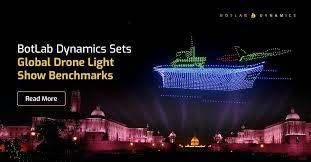
There is a version of this story that begins with a press release. Seven Guinness World Records. Thousands of drones in the sky above Rashtrapati Bhavan. The Prime Minister. The French President. Multiple countries.
That version is true. But it is not where the story starts. It starts with a wire.
The First Attempt
It was 2016. Tanmay Bunkar, CEO of BotLab Dynamics, had assembled a drone, mounted a small camera on it, and driven out to scan an open field. He had one GPS unit and one drone, and the wire on the GPS had stripped off.
"Tanmay was very chilled and relaxed," recalls Anuj Barnwal, now CTO of BotLab Dynamics. "We went there and manually connected the wire without soldering it. It was a very risky step." They flew anyway, and the drone recorded the whole area. The photo came out fine.
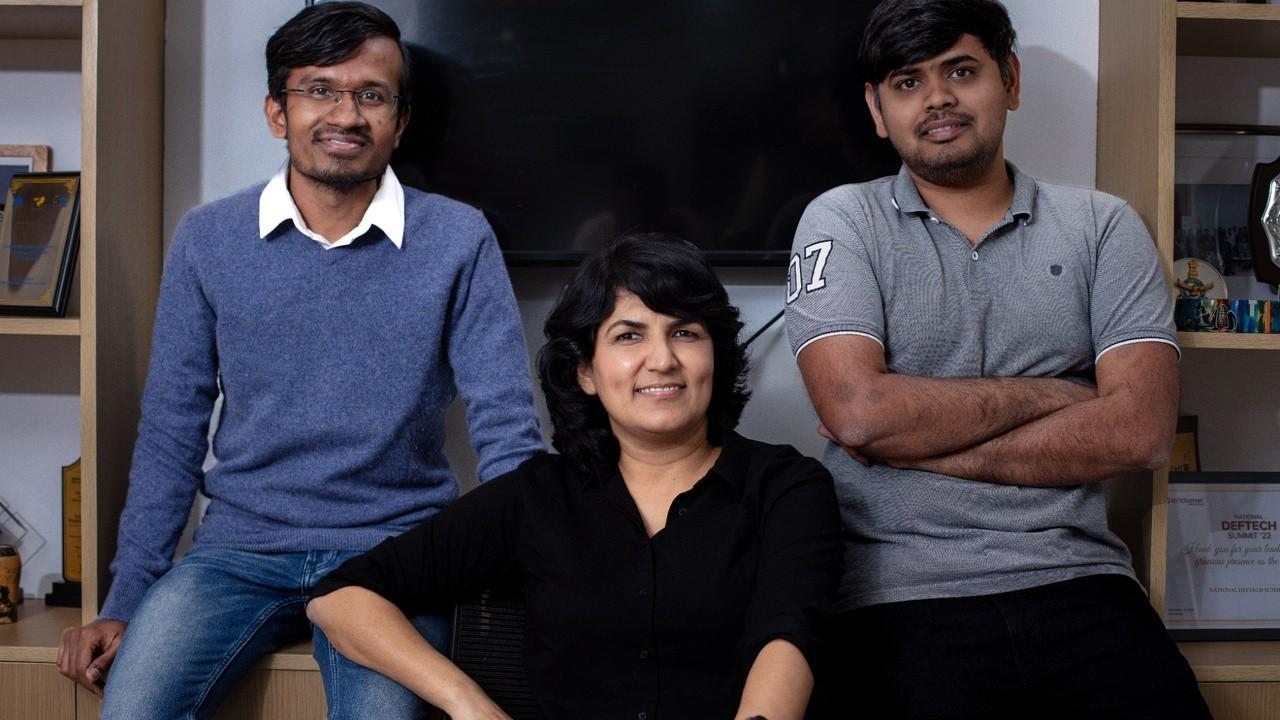
BotLab Dynamics was incorporated that year and incubated at IIT Delhi's Technology Business Incubation Unit. Three co-founders shared one room and one conviction: that India was leaning on foreign technology for something it had no business outsourcing. "We were asking a question nobody else seemed to be asking," Tanmay says. "We didn't know exactly what the application would be, or when, or how. But we knew there would be applications worth investing in."
Pokhran
Three years in, the team got its first real test at Pokhran in 2019, a defence challenge from the Indian Air Force. Their fleet had flown perfectly back in Delhi, but the desert heat and dust killed the hobby-grade parts they were using, and they couldn't complete the task once, in front of the country's top defence officials. It was a hard way to learn a simple lesson. So they stopped buying components and started building their own: flight controller, ESC, RTK GPS, ELRS receiver, all of it in-house. By 2020, they flew on fully indigenous hardware for the first time.
The DLS Business Model
While Tanmay and Anuj were buried in hardware, it was Dr. Sarita who saw the opportunity that would define BotLab Dynamic’s next decade.
The company was three years old and financially struggling. Fundraising was not working. Without a clear business model, nobody was writing cheques. Dr. Sarita went to Tanmay with a question: could they do drone light shows?
Tanmay was not immediately convinced. Anuj supported the idea. They flew ten drones at a Dussehra celebration in 2019, using their defence drones fitted with LED lights. There was no music. No design. No choreography.
"Every single person, children and adults alike, had their phones pointed at the sky," Dr. Sarita recalls. A friend recorded the video. The next morning, she showed it to Tanmay.
That was the moment. Not a boardroom decision or a strategic pivot document. Just a video of people looking up.
BotLab Dynamics had found its business model.
Beating Retreat 2022: From Nobody to Somebody
The call came from the Ministry of Defence. Senior officials had been visiting BotLab Dynamics for years, watching, asking questions, trying to understand whether what they were seeing was genuinely Indian technology or imported and repackaged.
After a full day of assessment, Joint Secretary Satish Sir had one question: "You are making 40 or 50 drones." Can you make thousands?
Dr. Sarita asked for financial support. They agreed. Within two weeks, the project was sanctioned. The task: fly one thousand drones at the Beating Retreat ceremony at Rashtrapati Bhavan on 29 January 2022.
What followed was six months, the BotLab Dynamics team describes simply as a continuous cycle of day-and-night hard work. The team grew from twelve people to forty-two. This was during COVID, with chip shortages, supply chain disruptions, and every conceivable logistical obstacle. They were increasing headcount, building new skills, continuing R&D, and manufacturing at scale all at the same time.
"Nobody complained," Dr. Sarita says. And on 29 January 2022, a thousand drones painted the sky above Rashtrapati Bhavan. India became only the fourth country in the world to host a drone show of this scale.
"From being nobody, overnight we became somebody."
Where BotLab Dynamics Stands Today
Ten years on, the company that once struggled to fly six drones in a desert now flies a fleet of more than 10,000 drones and has staged more than 700 Drone Light shows, with every flight controller, GPS module, and ESC still built in-house.
The record count has kept climbing. Five Guinness World Records came in a single night at the Amaravati Drone Summit in 2024, when the company flew 5,500 drones at once. A sixth and seventh followed in 2025 at Mysuru Dasara, where a drone tiger formation stopped 35,000 people cold at Bannimantap Parade Grounds, and at the Telangana Rising Summit. That brings the total to seven. In between, BotLab Dynamics staged what it calls the biggest drone light show ever held in India, for the Ambani pre-wedding celebrations in Jamnagar, a show credited with kicking off the wedding drone show trend in India and beyond. More than a dozen wedding shows followed in 2024 alone.
The client list has grown just as fast. BotLab Dynamics has opened the Tata IPL season to a crowd of more than 128,000 at Narendra Modi Stadium, flown at the National Games and the Northeast Olympic Games, and shared the sky with performers like Alan Walker, Martin Garrix, Karan Aujla and Devi Sri Prasad. It has built drone shows for brands including Pokémon, Crunchyroll, Mercedes, Amul, Paytm, Zomato, Godrej Properties, Amazon, and Mahindra, and worked its way into traditions far older than the company itself, Mysuru Dasara, Diwali Deepotsav in Ayodhya, Shakti Vijayotsav in Vijayawada.
Beyond India
The company's first show abroad came soon after Beating Retreat. In June 2022, BotLab Dynamics flew an 800-drone display over Djibouti City to mark the country's 45th Independence Day, the largest drone show Africa had seen at the time.
Sri Lanka followed in 2024, with the country's largest drone light show staged for a Lanka Premier League cricket match. In 2025, BotLab Dynamics moved into the Middle East, putting on one of the largest drone shows in Oman's history for Sultan Haitham bin Tariq and flying eight separate shows across Kuwait for the Ya Hala festival.
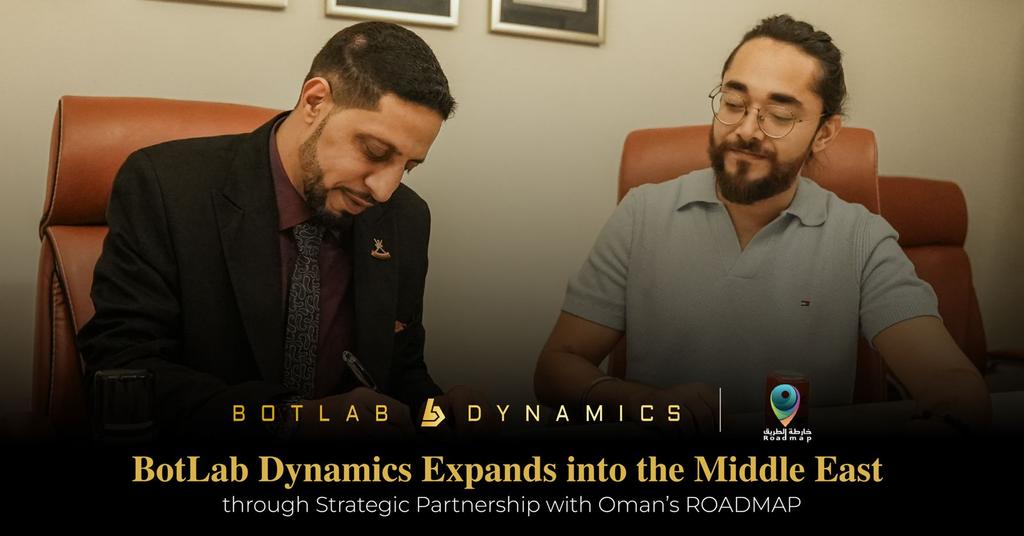
That same year, the company entered a partnership with the Muscat-based event company ROADMAP Oman and opened its own office in Dubai, a deliberate move into one of the most competitive drone show markets anywhere.
Vayudh
Alongside the shows, BotLab Dynamics has been building something it talks about far more carefully: Vayudh, its defence technology arm. It was there from the start in spirit, growing out of the same swarm intelligence the company built for Pokhran, but it only formally launched as its own effort in recent years. Vayudh builds indigenous drone platforms for battlefield intelligence, surveillance, and reconnaissance, the kind of unglamorous work that doesn't make it into a highlight reel.
In April 2025, Vayudh raised $10 million in a round led by Dharana Capital, with Zomato's Deepinder Goyal among the investors. That funding is behind Atri, the nano surveillance drone that was shown to Prime Minister Modi and French President Macron at VivaTech 2026, built with support from the government's iDEX defence innovation programme. The company also built Vayusim, a defence-grade drone training simulator with real terrain modelling and full weather simulation, which Indian defence authorities have since approved and ordered for deployment.
BotLab Store
In July 2025, BotLab Dynamics opened up a part of the business that used to be entirely internal. Its new Drone Component vertical, BotLab Store, sells the same flight controllers, ESCs, GPS modules, and firmware that power its own shows directly to other startups, hobbyists, researchers, and drone manufacturers in India. The reasoning, as the company tells it, is that too many talented teams building drones in India were running into the same wall: imported components, often from China, with unreliable support and long supply chains. BotLab Dynamics decided it didn't want to be the company that kept its best hardware to itself.
The People Who Built It
None of this felt inevitable to the three people who started it. Anuj remembers the size of the first office: "I think it was as big as where we're sitting." Tanmay adds, without missing a beat, "Add three more chairs. That's our office." For a long stretch, a co-founder was the only person who reliably showed up each day.
"I never thought it would happen, to be honest," Tanmay says now. "It took me a few days to realise that what we started in a hostel room has now reached here. If you believe, it happens. That's all."
The flight controller they built because they couldn't afford to buy one is now the foundation that other companies build on. In 2016, three people in a room at IIT Delhi asked a question nobody else seemed to be asking. Ten years on, the whole world is looking up at the answer.